

 Polski
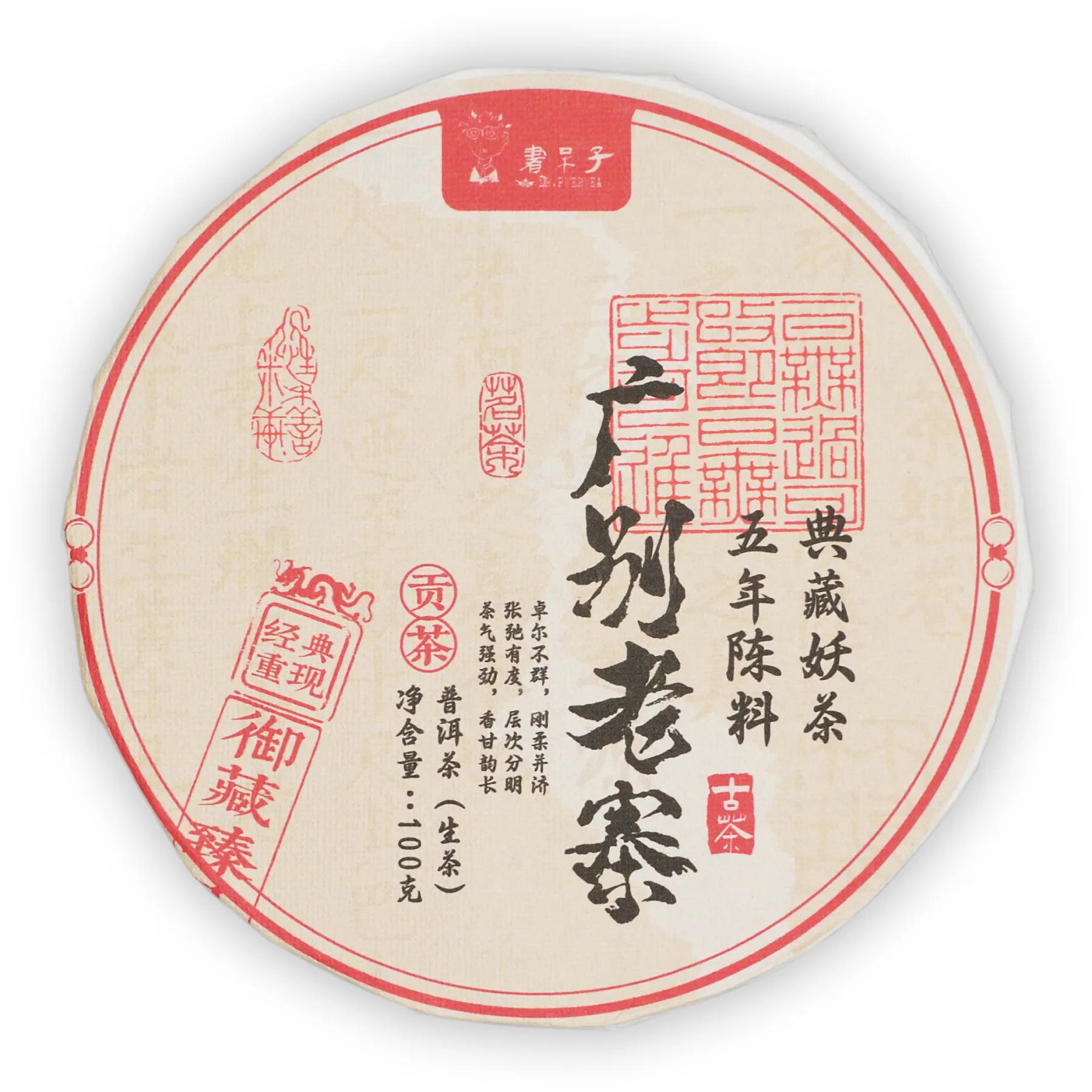
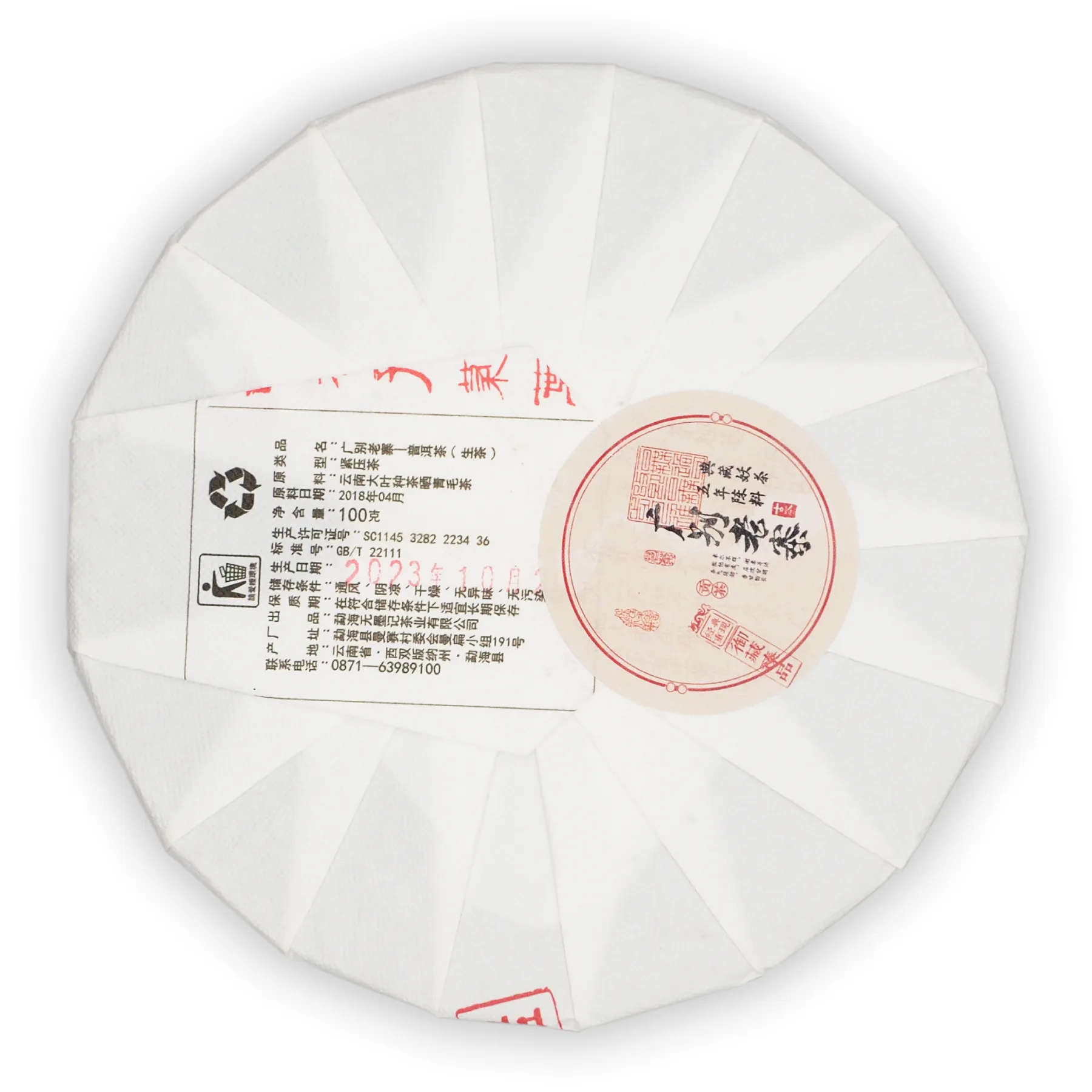
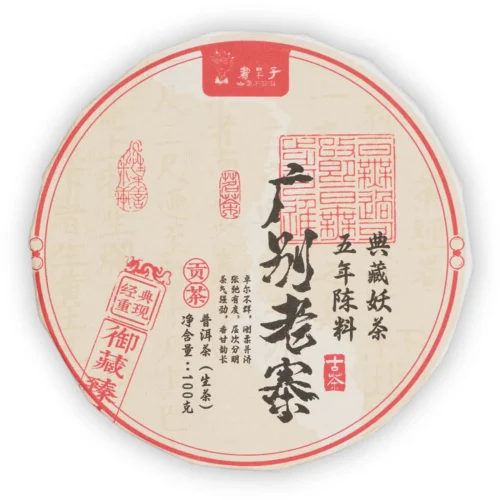
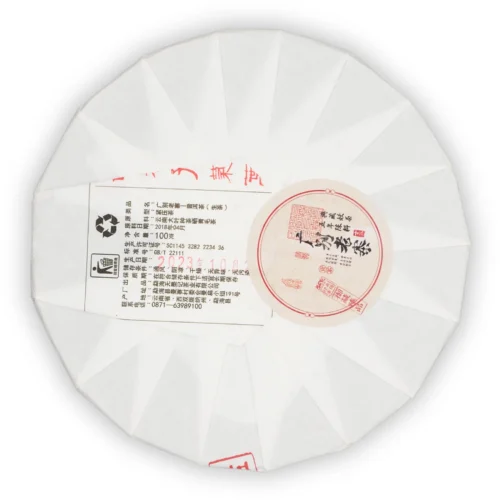

Shudaizi Guangbie Laozhai 2023 Sheng Pu-erh 100 g
78,00 zł
Shudaizi Guangbie Laozhai 2023 is a Sheng Pu-erh from Bulangshan, made from 2018 spring material and pressed in 2023. Its thick, silky infusion combines floral and fruity aromas with honeyed sweetness and notes of orchid and cane sugar.
In stock
Guangbie Laozhai
Guangbie Laozhai is a sheng pu-erh from the Shudaizi 书呆子 brand, named after the village of Guangbie Laozhai, where its leaf comes from. The village lies in Menghai County 勐海, in the Bulangshan 布朗山 mountains, Xishuangbanna 西双版纳, Yunnan 云南, at 1,600–1,800 m above sea level — right between two famous tea areas: Laobanzhang 老班章 and Hekai 贺开.
Bulangshan 布朗山 is one of Yunnan’s best-known tea areas, famous for pu-erhs with a strong, intense character. Guangbie Laozhai, however, stands out against them with its exceptional aroma and sweetness. That is why tea from Guangbie Laozhai is sometimes called “enchanting tea” 妖茶 (Yao Cha).
Spring leaf from Guangbie
It was made from sun-dried leaf, hand-picked in spring 2018.
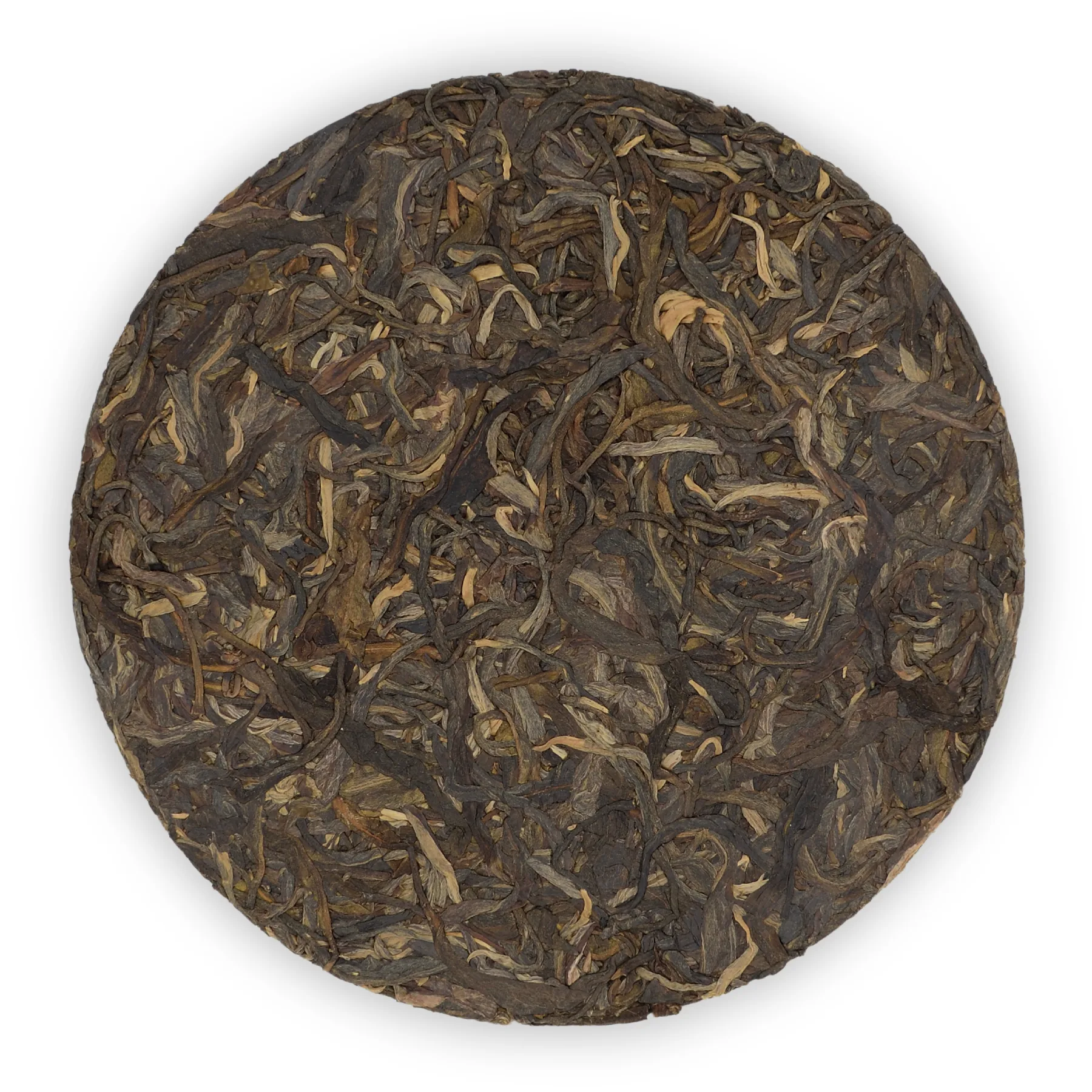
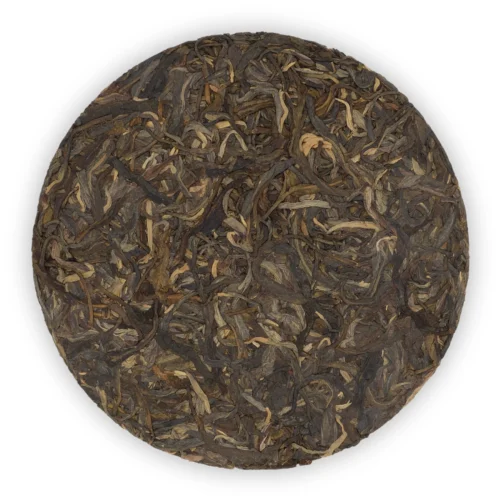
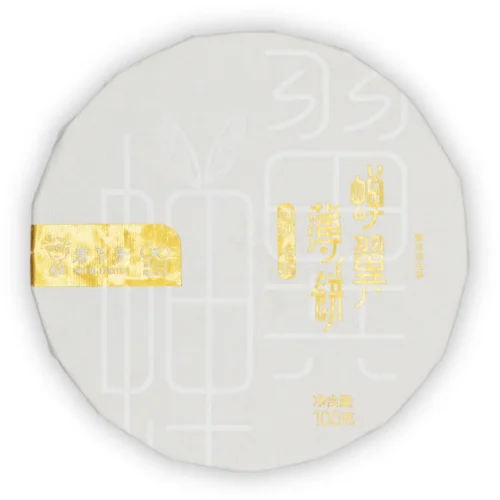
The exceptionally thin form of the cake catches the eye — it is only about 0.5 cm thick. Delicate and light, it resembles a cicada’s wing. This makes it easy to break off a small portion of leaves without having to crumble the whole cake.
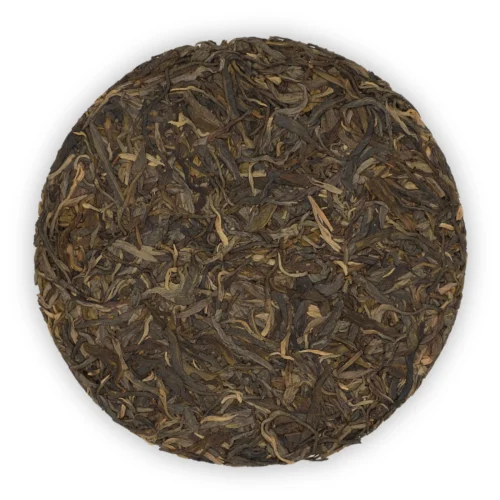
The leaf is the same inside the cake as on its surface. You can see long, thick leaves and numerous silvery buds covered in fine down. Once brewed, the leaves unfurl quickly, revealing their springy, lively structure.
Aroma and taste
The infusion is golden in color, thick and full. A distinct aroma appears as soon as water is poured. At first you may notice delicate floral notes and the fruity tone of wild honey, and in later infusions the aroma of orchid becomes ever stronger. Over time a subtle note of cane sugar joins in.
On the palate Guangbie Laozhai is round, soft and silky. The infusion coats the tongue and palate, and its sweetness gradually builds and lingers in the mouth for a long time. Floral and fruity tones intertwine with honeyed sweetness, creating a full, harmonious profile.
At the same time, the tea keeps the distinct character of its region — it combines softness and sweetness with the depth and intensity typical of Bulangshan. After a few cups you may also feel its warming effect.
Guangbie Laozhai, from a well-known village in Bulangshan, is one of those teas worth having in your collection.
How to brew sheng pu-erh

Gaiwan / small teapot: approx. 5 g of tea per 100 ml of water at 90–95°C. Give the leaves a quick rinse and discard it. First infusion 5–8 seconds, then gradually longer.
Mug: approx. 3–4 g of tea per 300 ml of water at 90–95°C. The infusion is ready after about 2–3 minutes – it is worth starting with a shorter time and tasting, as sheng easily turns bitter.
Pu-erh can be prepared in many different ways by changing the ratio of tea to water, the temperature and the steeping time. It is worth experimenting to find what suits your own taste best.
| Country of origin | China |
|---|---|
| Province | Yunnan |
| Tea region | Guangbie Laozhai |
| Cultivar | Da Ye Zhong |
| Harvest | 2018 |
| Year of pressing | 2023 |
| Tea type | Pu-erh Sheng |
| Ingredients | 100% tea leaves |
| Net weight | 100 g |
| Storage instructions | Store in a cool, dry place, away from light, moisture and strong odors. |
Only logged in customers who have purchased this product may leave a review.
Related products
Sheng Pu-erh (raw)
Sheng Pu-erh (raw)
Sheng Pu-erh (raw)
Sheng Pu-erh (raw)
Sheng Pu-erh (raw)
Sheng Pu-erh (raw)
Reviews
There are no reviews yet.